





We have effective lecturers that are well organized, competent, …
The University of Nairobi Students Society (UNGSS) has organized an online Webinar to mark the Environment Day…
All are invited to attend the UoN/University of Milan lecture
Tuesday 2.30 PM, 20th April, 2021
Speaker: Manasiti Omar (MSc. student, Wangari Maathai Institute).
Discussant: Dr.…
Sunday, April 7, 2024 - 01:26
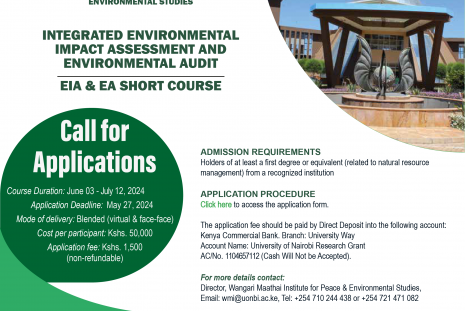
Are you looking to enhance your understanding of environmental impact assessment (EIA) and environmental auditing (EA)? The Wangari Maathai Institute (WMI) at the University of Nairobi (UoN) June 2024 INTAKE is now ON for these short courses.
This
Read moreSunday, May 22, 2016 - 20:30
The Launch and Grow is a programme in business leadership for women in Kenya promoted by the Women for Africa Foundation in collaboration with the University of Nairobi at Wangari Maathai Institute for Peace and Environmental Studies (WMI), Babson College and Banco
Read moreSunday, May 22, 2016 - 20:28
In honor of “Gender Day” at the annual United Nations Framework Convention on Climate Change Conference of the Parties (COP-19), the
Latest News & Announcements
Sunday, July 19, 2026 - 10:48
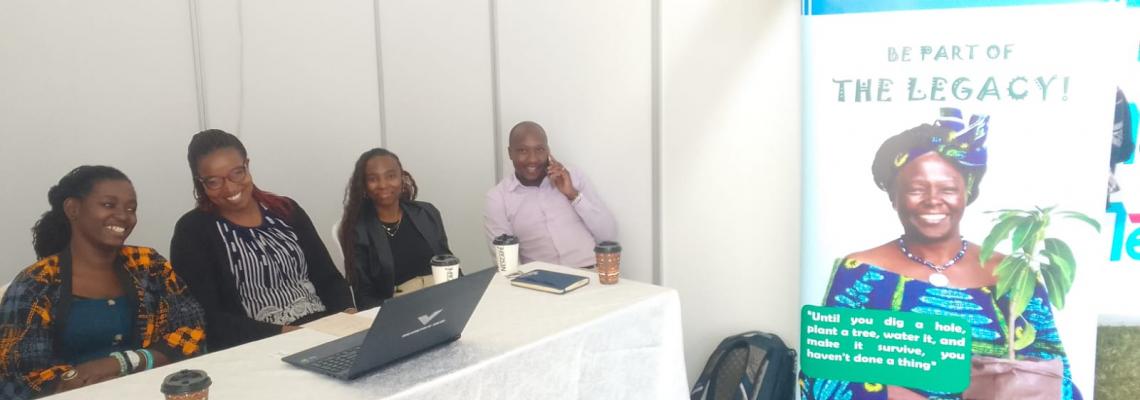
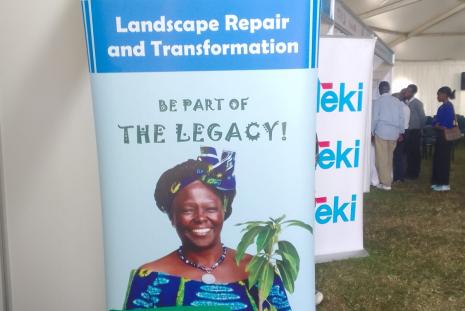
The Landscape Repair and Transformation (LANSRET) initiative, a partnership between the University of Nairobi's Wangari Maathai Institute (WMI) and Hearts of Green, showcased its landscape restoration model during the 2026 Nairobi Innovation Week. The exhibition demonstrated how research,
Read more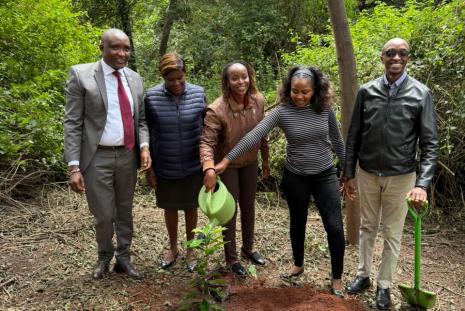
Tuesday, June 9, 2026 - 22:42
PhD Class of 2025 following the tradition of planting Co-hort group tree at WMI on 28th May 2026 next to Open Amphitheatre in support of Wangari Maathai Legacy.

Saturday, March 14, 2026 - 06:34
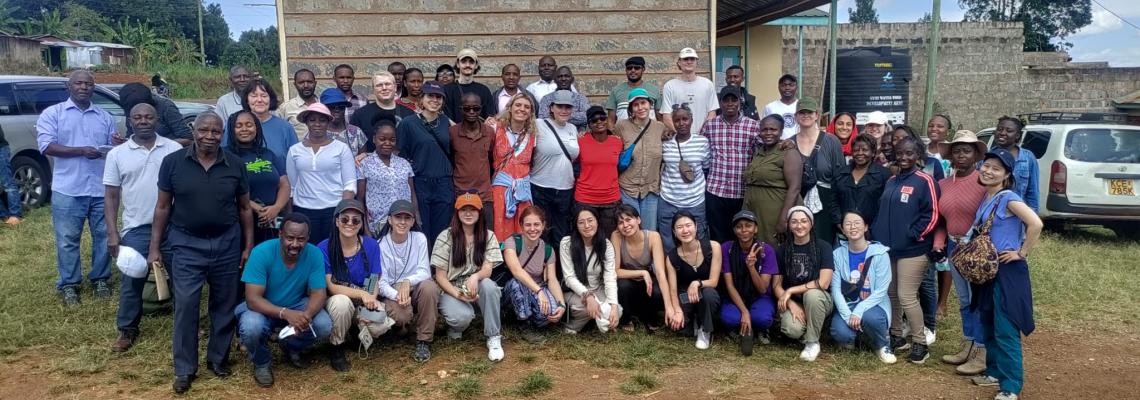
Students from the Sustainable Land Use and Natural Resource Management Programme (SLUSE) interdisciplinary field course held a community feedback session at Othaya Community Hall to share insights from their recent fieldwork in Othaya, Nyeri County.

Thursday, March 5, 2026 - 16:07
The Wangari Maathai Institute for Peace and Environmental Studies marked the 2026 Wangari Maathai Day and Africa Environment Day with a tree growing activity on 3rd March that brought together SLUSE students from WMI and the University of Copenhagen, members of the Gatugi community, and the
Read more